After returning to power in Delhi after nearly three decades, the BJP government says its focus will be on long-term urban transformation, from reducing air pollution and expanding electric mobility to strengthening healthcare systems and improving public safety.
In an interview with The Statesman, Delhi Chief Minister Rekha Gupta spoke about the government’s plans for the capital, from pushing electric vehicles and building more charging stations to improving women’s safety and upgrading public hospitals.
Advertisement
She also spoke about Delhi’s long-running pollution problem, the pressure a fast-growing population is putting on the city, and why governments will have to work together to fix infrastructure gaps.
1. What is the EV plan of Delhi for passenger vehicles?
The transition to electric mobility is one of the central pillars of our government’s environmental strategy. Vehicular emissions account for a significant share of Delhi’s pollution, especially during the winter months, and therefore electrification of passenger vehicles is critical if we want lasting improvements in air quality.
Our upcoming EV Policy 2.0 focuses on three main pillars: affordability, infrastructure and sustainability. For passenger vehicles, the policy proposes strong financial incentives during the first three years to accelerate adoption. Infrastructure is equally important. The government plans to install sufficient public charging stations across Delhi by 2030, with each having multiple charging points located in markets, parking complexes, residential societies and government buildings. These should be available like petrol pumps are for ICE vehicles.
We are also expanding electric public transport, and thousands of electric buses are being added to the fleet to ensure that clean mobility becomes the backbone of Delhi’s transport system. We already have the largest e-bus fleet in the country, and we plan to increase it to at least 13,000.
Our long-term vision is clear: Delhi should become India’s EV capital where owning an electric vehicle is affordable, convenient and environmentally responsible.
FULL COVERAGE
Rekha Gupta on Delhi’s governance, crime, pollution and EV push
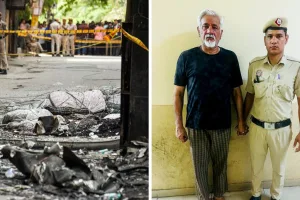
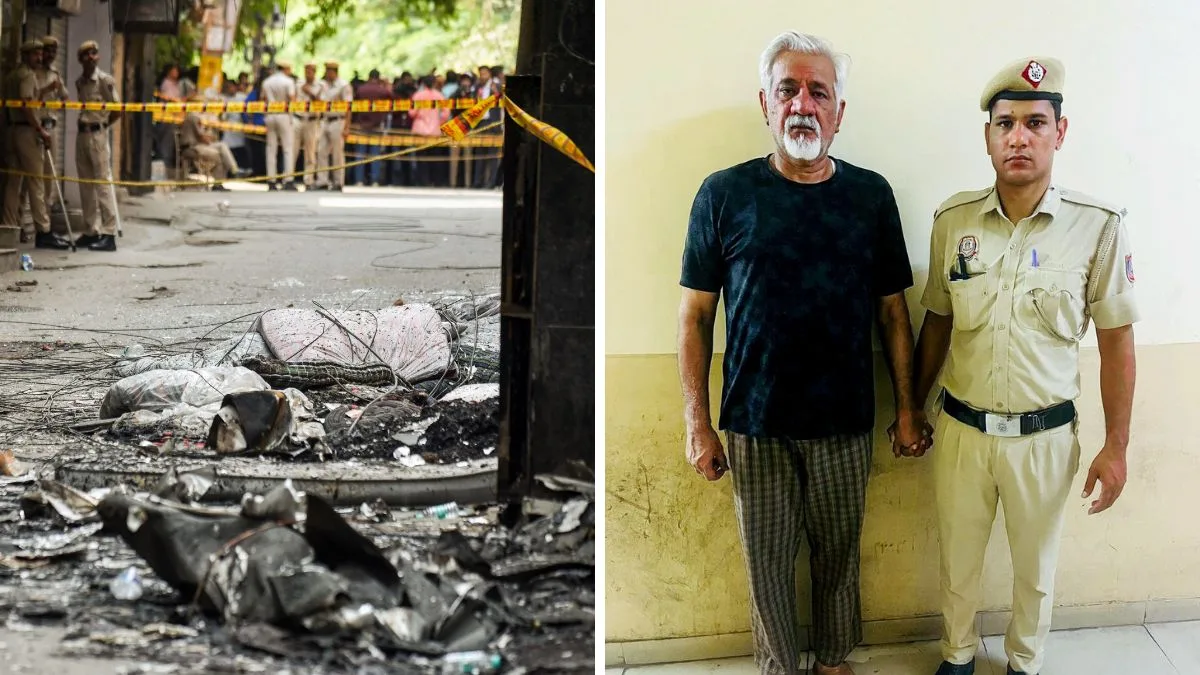
2. You took a strong stand on the Uttam Nagar Holi murder case. What is the government’s stand on such cases?
The message from the government is very clear: Delhi will not tolerate heinous crime. When crimes shock the conscience of society, the administration must act decisively within the framework of law. The safety of citizens is the first responsibility of any government.
At the same time, we believe in due process and the rule of law. What we are trying to do is create a strong deterrence so that criminals understand that the state will respond firmly.
Our broader approach to law and order is not limited to punitive action. It includes better surveillance systems, improved coordination between civic agencies and police and investment in safer infrastructure. When citizens feel that the government stands with victims and not with criminals, trust in governance improves.
3. Women’s safety in the city?
Women’s safety is not just a governance issue; it is a social commitment. A city cannot call itself developed unless women feel safe at any hour of the day. Over the past year, we have worked on several initiatives aimed at improving safety and mobility for women. One example is the Saheli Pink NCMC card, a digital travel initiative designed to make public transport easier and safer for women commuters.
But safety is about more than just transport. It involves lighting of streets, better surveillance through CCTV networks and rapid coordination between law-enforcement agencies. We are also strengthening community-based initiatives and awareness campaigns to encourage reporting of crimes and ensure quick response.
At the policy level, we are expanding women-centric healthcare and social infrastructure as well to empower women. There are over 500 palna ghar across the city now. We offer nutrition kits to pregnant women, and we just rolled out the amount for Ladli scheme beneficiaries that had remained pending for over a decade. In fact, we have gone a step further and added more benefits to the Ladli scheme to transform it into the Lakhpati Bitiya scheme.
Ultimately, safety is a combination of policing, infrastructure and social attitudes. Our government is committed to addressing all three.
4. Arvind Kejriwal is portraying relief in the liquor scam as a victory?
Legal matters are before the courts, and it would not be appropriate for me to comment on specific proceedings. Our constitutional system functions on the principle that courts decide legal questions independently. Kejriwal still needs to face the High Court and the Supreme Court.
Public life comes with accountability. When serious allegations arise regarding public policy or governance decisions, the people of Delhi expect transparency and clear answers. Political leaders should focus on explaining their actions rather than turning legal developments into political narratives. However, AAP leaders destroyed evidence, including hundreds of phones, and did not respond to summons by investigating agencies. What were they trying to hide?
My government has consciously chosen a different approach. Instead of engaging in political drama, we are focusing on governance, whether it is improving infrastructure, addressing water supply issues, expanding public transport or tackling pollution.
The citizens of Delhi are more interested in practical solutions that affect their daily lives. Our priority is to deliver on those expectations.
5. Do you think Congress is working at cross purposes with the country?
In a democracy, opposition parties have a very important role. Constructive criticism strengthens governance and helps governments improve policies. However, when misinformation spreads, especially during crises, it can create unnecessary panic among citizens.
For example, issues such as fuel supply, energy availability or pollution require coordinated responses between different levels of government. Political narratives that amplify misinformation can undermine public confidence in institutions. Governments and opposition parties should both focus on solutions. Delhi faces several complex challenges of rapid population growth, pollution, water supply and infrastructure pressure. Addressing these issues requires cooperation across governments, parties and institutions. Our administration remains focused on practical governance rather than political confrontation. Citizens ultimately judge governments by results, not rhetoric.
6. The BJP has come to power after 27 years in Delhi. How are the challenges in governance different from what previous governments have dealt with?
Every era of governance has its own challenges and priorities. Sheila Dikshit focused on large infrastructure projects that transformed Delhi’s roads and transport network. Our vision is what I call “Integrated Development for a Developed Delhi”.
This means ensuring that infrastructure, environmental sustainability and social services grow together. For instance, we are simultaneously working on electrifying public transport, expanding charging infrastructure, improving water supply management and upgrading healthcare systems.
We have also introduced targeted development initiatives to ensure that growth is not concentrated in a few areas. Recently, the government announced a special development budget for each assembly constituency so that local infrastructure needs can be addressed more effectively. We have revived the trans-Yamuna and rural development boards.
At the same time, environmental sustainability is central to our model. Projects ranging from rooftop solar installations on government buildings to large-scale EV adoption are part of this approach. Our goal is to create a city where development is balanced, sustainable and inclusive.
7. Which global city would you like Delhi to become?
Delhi is unique because it combines ancient history with modern aspirations. The goal is not to replicate any one city but to learn from the best practices of many global cities. For instance, cities like Singapore demonstrate how efficient urban management and technology can transform governance. London offers a strong example of integrated public transport networks. Cities in East Asia have shown how urban planning and innovation can coexist with dense populations. Our aim is to adapt such global best practices to Delhi’s context. That means modern infrastructure, efficient public transport, clean air, digital governance and vibrant cultural spaces.
At the same time, Delhi must preserve its heritage, from historic markets like Chandni Chowk to monuments and traditional neighbourhoods. Development should enhance the city’s identity rather than erase it. If we succeed, Delhi will not merely resemble another global city; it will become a global model in its own right.
8. How will Delhi get rid of its air pollution?
Air pollution is one of the most complex challenges Delhi faces, and there is no single solution. It requires a multi-sector strategy.
First, transport emissions must be reduced. This is why we are pushing aggressively for electric mobility and expanding the electric bus fleet to reduce dependence on polluting vehicles.
Second, we are strengthening environmental infrastructure with cleaning drains and improving water systems as part of broader ecological restoration efforts connected to the Yamuna river system. Third, urban management practices such as dust control at construction sites, road maintenance with end-to-end road paving and greening, automated misting systems across major roads and green budgeting will play a major role. Air pollution in Delhi is also a regional problem involving neighbouring states and agricultural practices. Therefore, cooperation with the central government and surrounding states is essential.
9. Will Delhi introduce right-to-charge or congestion pricing?
Both of these ideas are being studied carefully because global cities increasingly rely on such mechanisms to manage traffic and encourage cleaner mobility. A right-to-charge policy can help accelerate EV adoption by ensuring that residents of apartments and housing societies have access to charging facilities. Without such a framework, many people who want to switch to electric vehicles may find it difficult.
Congestion pricing is a more complex issue. While cities like London and Singapore have implemented it successfully, Delhi’s transport system and regional commuting patterns are different. Many people travel daily from neighbouring NCR cities, so any such policy must be carefully evaluated.
Our immediate priority is to strengthen public transport and expand EV infrastructure first. Once reliable alternatives to private vehicles become widely available, policy tools such as congestion pricing can be considered more seriously.
10. How is politics different for women?
Women in politics often face a different kind of scrutiny compared to men. There are expectations not only about leadership but also about balancing public life with personal responsibilities. However, I see this not as a challenge but as an opportunity. Women leaders often bring empathy, patience and consensus-building skills to governance. These qualities are extremely valuable in public administration.
My own journey in politics has been shaped by grassroots work and engagement with communities. Support from my family has been crucial because public life requires long hours and constant commitment. I believe India is entering a phase where more women will participate in politics and leadership roles. Governments must encourage this trend by creating opportunities and platforms for women to lead.
11. One message to Delhiites?
My message to the people of Delhi is simple: this city belongs to all of us.
Government policies alone cannot transform a city. Citizens must also participate by following traffic rules, supporting environmental initiatives, conserving water and electricity and keeping neighbourhoods clean.
Delhi has immense potential. It is a city of entrepreneurs, professionals, students and cultural diversity. If we work together, government and citizens, we can overcome challenges like pollution, congestion and infrastructure pressure. I want every resident to feel proud of this city and to contribute to its development. They should also know that they have a CM and ministers who are willing to work 24 hours and 365 days for them.
12. One message to AAP?
Democracy works best when there is constructive opposition. I would encourage them to contribute ideas and policy suggestions that help improve governance. Political competition should be about offering better solutions to citizens rather than constant confrontation. Delhi’s people expect their leaders to work on real issues such as pollution, water supply, transport and economic growth. If opposition parties engage in constructive debate, democracy becomes stronger.
13. One message to online trolls?
Social media has transformed public discourse. It allows citizens to directly question governments and hold leaders accountable, which is a positive development. However, debate must remain respectful. Disagreement is part of democracy, but abuse and misinformation do not strengthen society. My message to online users is to use digital platforms responsibly and with fact-based information. If social media becomes a space for constructive dialogue, it can help improve governance and transparency.
14. Congress ecosystem vs the BJP-RSS ecosystem with respect to women?
Every political ecosystem evolves differently. In our organisation, women have been encouraged to take leadership roles at every level, from grassroots workers to chief ministers and cabinet ministers. The philosophy of our movement is that women should not only be beneficiaries of welfare schemes but also participants in decision-making. Political empowerment is just as important as social or economic empowerment. When women participate in governance, policies become more inclusive and responsive.
15. How will you strengthen government hospitals and healthcare infra?
Delhi’s healthcare system carries a unique burden because patients from across the country also come here for treatment. This puts enormous pressure on public hospitals. Our approach has three components: expanding infrastructure, strengthening primary healthcare and improving management systems. We are working to upgrade hospital facilities, increase bed capacity and introduce better digital systems to manage patient flow. Preventive healthcare and community clinics like the Aayushman Arogya Mandirs will also reduce the load on tertiary hospitals. Healthcare is a priority sector for our government, and improving it will remain a continuous process.
16. Does Delhi need a long-term population planning policy?
Absolutely. Delhi’s population has grown rapidly over the decades, and this has put enormous pressure on housing, transport, water supply and environmental systems. Urban planning must look at least 20–30 years ahead. That means integrating Delhi’s development with the broader National Capital Region so that growth is distributed more evenly. Smart urban planning, transit-oriented development and better land-use policies will help manage population pressures more effectively.
17. What is the one policy success you want people to judge your tenure by?
If five years from now Delhi becomes visibly cleaner, better connected and more efficiently governed, I would consider that a success.
Whether it is reducing pollution through electric mobility, improving public transport, strengthening healthcare systems or modernising infrastructure, the goal is to make daily life easier for citizens. Ultimately, governance should be judged by outcomes, not announcements.